Location has been disabled. Location sharing is required to view local results around your location. To use it, you must enable the permission to access the location in the browser settings.
Location has been disabled. Location sharing is required to view local results around your location. To use it, you must share the permission to access the location. To do this, click the lock icon to the left of the address bar and release the appropriate permission.
Location has been disabled. Location sharing is required to view local results around your location. To use it, you need to share the permission to access the location in your device settings under "Privacy and security -> Location services -> Your used web browser (eg. Safari/Chrome/...)".
Location has been disabled. Location sharing is required to view local results around your location. To use it, you must share the permission to access the location. To do this, click the icon to the left of the address bar and then reload the page.
Location has been disabled. Location sharing is required to view local results around your location. To use it, you must share the permission to access the location. To do this, click the icon to the right of the address bar.
From cargo ports to pleasure harbours
Redaktioneller Artikel
Tourguide
26. December 2025
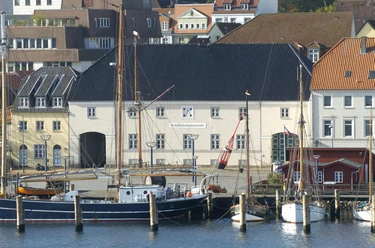
The time span of the West Indies trade plays a significant role in Flensburg's maritime history. From the 18th to the 19th century, coffee, cocoa, and rum were imported to the city via this trade route. The heyday of merchant shipping was facilitated by Danish neutrality in the conflicts of the 18th century. This era ended with Denmark's entry into the war against Great Britain in 1807. However, maritime trade experienced a new upswing with the beginning of industrialisation around 1830. In the 19th century, cargo sailing ships were gradually replaced by steamships. Introducing pleasure navigation and public fjord steamers, leisure boating gained importance. The time period from the 1950s to 1999 was the time of the so-called "butter ships". These were excursion tours, crossing the German/Danish borders. Finally, the larger trade in goods shifted to major ports like Hamburg and Copenhagen.