Location has been disabled. Location sharing is required to view local results around your location. To use it, you must enable the permission to access the location in the browser settings.
Location has been disabled. Location sharing is required to view local results around your location. To use it, you must share the permission to access the location. To do this, click the lock icon to the left of the address bar and release the appropriate permission.
Location has been disabled. Location sharing is required to view local results around your location. To use it, you need to share the permission to access the location in your device settings under "Privacy and security -> Location services -> Your used web browser (eg. Safari/Chrome/...)".
Location has been disabled. Location sharing is required to view local results around your location. To use it, you must share the permission to access the location. To do this, click the icon to the left of the address bar and then reload the page.
Location has been disabled. Location sharing is required to view local results around your location. To use it, you must share the permission to access the location. To do this, click the icon to the right of the address bar.
Regional export hit of the past
Redaktioneller Artikel
Tourguide
01. January 2026
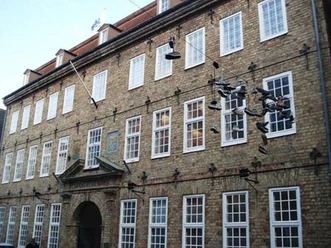
You've probably noticed that there are many brick buildings in the region. Maybe you have even found brick remnants on the beach? That is no coincidence. On the contrary, there is a good reason for this. About 150 years ago, smoking chimneys were characteristic of the landscape. More than 70 brick kilns were located on the banks of Flensburg Fjord. Here, the stones were "baked". This heating process is the reason, why Germans nicknamed them “Backsteine” (baked stones). In the construction boom of the 19th century, bricks from the region made for a genuine export hit. They were even shipped to far out Caribbean. Clay, the source material, was provided by the rich clay deposits shaped by meltwater in the Ice Age. “Flensburger Ziegel” (Flensburg bricks) were a particularly popular export success. They were somewhat handier than the larger stones that are still seen today e.g. at the Flensborghus.